The only true joy on earth is to escape from the prison of our own fake self and enter by Love into union with the Life who dwells and sings with the essence of every creature and in the core of our own souls.
~ Thomas Merton
Lewis Hyde tells us in The Gift: Imagination and the Erotic Life of Property that “The gift moves toward the empty place.”¹. The gift is, in its pure form, perpetual motion, consumed, forever expanding, shape shifting, unhindered by the linear constraints of markets and possession, its “spirit kept alive by constant donation”¹. Gifts move toward the place of scarcity; they are a sensory (hence, erotic) response to a void in the fabric of life manifested in the physical world. The gift fills a space that tends to remain hollow in modern western societies due to the acceptance of the idea of scarcity as a root metaphor for the unfulfilled existence. This metaphor is driven by a capitalistic mentality that values things and products above relationships with both others and the natural world. It has led to a commodification of nature for profit, and has the opposite effect of giving.
Macroeconomics introduces the idea of scarcity, and as Hyde succinctly points out, “it’s all over by the end of Chapter 1”. Scarcity, as defined by Pearson, a leading textbook producer in the United States, is “our inability to satisfy all our wants and needs”². The theory of economics assumes every human being faces a life of unfulfilled desires. These cravings fuel the capitalistic economy. This reduces humanity to a set of quantifiable interactions following prescribed rules and regulations designed to accumulate wealth or money. Trade for profit creates linear relationships among people and among people and nature resulting in that which is kept, stored, or hoarded. It generates a system of checks and balances that denies the natural flow of material goods through a system, much as a dam along a river diverts the flow of water from its true destination.
Many tribal societies have or have had gift economies. Both Hyde in The Gift, and William Cronon in Changes in the Land, focus their examinations on the gift economy. While Cronon focuses solely on New England during the time of colonization, Hyde discusses a wide variety of indigenous practices, including those in colonial New England. Hyde examines the social impact of the gift economy, stressing how tribal people viewed gifts and capital distinctly. The goal of a gift was never to be profit, for this killed the spirit of the gift itself. A gift was like a well of communal sharing, where spiritual, relational, and economic growth from the exchange was spread through the community by the forward motion of giving. The harvesting of capital, leading to accumulation, did not have the same effect on communities. Cronon examined how accumulation, manifested in the desire to bound the land and harvest its resources, led to the physical destruction of the land. This eventually slowed or deadened the growth process.
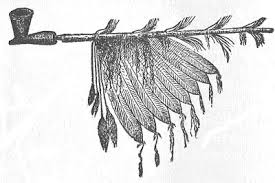
New World Europeans were bent on possession of physical goods as a sign of true wealth. These goods stemmed from the land itself, wild and bountiful, and bore up a monetary economy. During this time, the term “Indian giver” was coined. It is a colloquialism that represents a gift that has not been freely given because its exact return is expected. It is symbolized by the peace pipe, ironic in the reality that peace cannot be possessed, but rather must be shared. It needs to be perpetually passed from one to the next indiscriminately in order to flourish. Peace cannot stagnate, nor can a gift. Accumulation goes against the very purpose of gifting, and leads to an unfulfilled existence. Many a child on the school yard can recall being pressured by their peers to give up something they didn’t want to let go of, and when they demanded it back, they were labeled an Indian giver. Native Americans did not give with a desire for equal and exact reciprocation. Gifts flowed through their community coming to the hands of the receiver at the necessary time. This gifting was an economy of place that held reverence for the natural cycles of the land and for human relationships. “White Man Keepers” accumulated, breaking the cycle of the gift.
Wealth and possessions were not gathered in tribal cultures around colonial New England, partly due to a semi nomadic lifestyle and partly due to the lack of necessity for excess material possessions. Scarcity was not felt. Even in times of hunger there was a sense of patience and the ability to abide with natural cycles, such as going hungry on winter hunts³. Objects were given freely to those who needed them among the tribe. This was a regular, unquestioned practice, and bred a sense of contentment in the face of what the English perceived to be abject poverty. Thomas Morton, an English settler, lawyer, and avid observer of Native American culture, recognized that Native Americans “’lived richly’ and had little in the way of either ‘wants or complaints.”³
In modern economies, gifts have become objects of trade. This plays out clearly at Christmastime, a season often dominated by wants and complaints. A Christmas gift exchange is normal, both in offices and among families in America. The underlying premise is not simple giving; it is giving with the knowledge that receiving is inevitable. Christmas gifts are given among families, as are the endless lists of prerequests that begin months before the Christmas holiday itself. Much is attached to the gift – the ability of the giver to listen, satisfy, and be gracious, as well as the receiver’s ability to reciprocate this giving cycle. It can be a hollow transaction played out on a field of global economies caught up in consumption and in material possession as a symbol of personal status. It is rooted in the idea of scarcity, the idea that we can never have enough to be happy. Christmas has come to celebrate growth in retail markets much more than the birth of Christ, which is in and of itself a symbol for a gift that keeps on giving.
The true gift holds fast to the idea that “whatever we have been given is supposed to be given away”¹, and that, all things being cyclic in nature, true joy comes in not knowing what one will receive in return – but simply that there is abundance enough that one will indeed receive. It is like a beautiful mystery of the universe opening up before us. It is spoken in a language we cannot translate, but when we dive into the stream of nature’s consciousness, we become part of the current. Life as abundance makes a much better root metaphor than scarcity is unfulfilling. A healthy respect for the land – for the provisions that flow forth from the earth – leads to an ever decreasing desire to cling to the material possessions of this world.
¹Hyde, Lewis. “Some Food We Could Not Eat.” The Gift: Creativity and the Artist in the Modern World. New York: Vintage, 2007. Print
²Bade & Parkin. Foundations of Economics, 6th Ed. Boston: Addison-Wesley, 2013. Print
³Cronon, William. Changes in the Land: Indians, Colonists, and the Ecology of New England. New York: Hill and Wang, 1983. Print.
 Peeling Back the Moon
Very interesting:). The commercialization of gift giving around Christmastime (and, more frequently nowadays, at other commercial “holidays” (Valentine come to mind as well) cheapens the act of giving by depriving it of its spiritual and natural value. Gift, instead of being spiritual artifact associated with the person to whom one has a deep connection, become shallow nicknacks, cluttering space and devoid of real human value. In our “poetic dwelling” (Heidegger again:), we may try to stop and ponder about creative gift giving so that our dwelling with others will be spiritually enhanced, as you mentioned in the blog (I paraphrase it a little) and the gifts will “flow,” preserving “the reverence for the natural cycles of the land and human relationships”
LikeLike
I admire your lyrical writing style. I def feel like giving & gifting is a deeply personal thing. One ought to never give to receive & you are totally correct, the commercialization of the gift giving opportunity is a drag.
LikeLiked by 1 person